Land a Merchant Marine Job
With Zero Experience
Real Pay, Months Off
I started at sea as a dishwasher with zero experience and worked my way up to mate. This is the step-by-step roadmap I wish I'd had.
Two minutes on what the book covers and who it is for
Why People Trade the 9-to-5 for the Sea
Solid pay, weeks or months at home between hitches, and a workplace with a view most people only see on vacation.
Real Pay From Day One
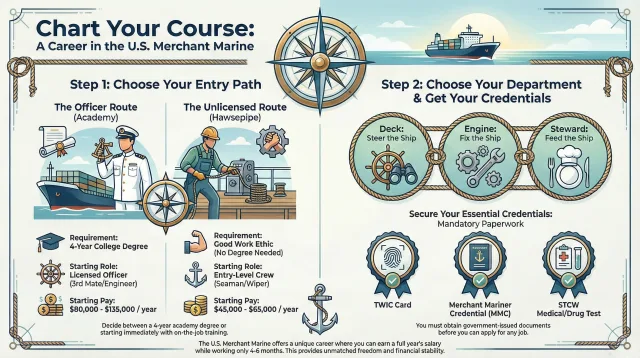
Typical entry-level pay runs $45K to $65K. Officers often earn $80K to $135K+. Overtime moves you up the range.
Months Off at a Time
Work a hitch, then go home. Many mariners take 4 to 6 months off a year, in long stretches, not two weeks at a time.
Get Paid to See the World
Foreign ports, open ocean and coastlines you'd never see from a desk. The view changes every hitch.
No Experience Needed
Entry-level jobs like Ordinary Seaman, Wiper and Steward need no sea time. You learn the rest on board.
What's Inside the Roadmap
Every step from landlubber to your first ship: TWIC card, Merchant Mariner Credential, unions, pay and life aboard. Tap or hover a card to see more.
Essential Credentials
TWIC, MMC, STCW & Medical Certs
You'll Learn:
- •How to obtain your TWIC card
- •Merchant Mariner Credential (MMC) application
- •Required STCW certifications
- •Medical exam requirements
- •Drug testing protocols
Three Departments
Deck, Engine & Steward
Explore Each Path:
- •Deck: Navigation & cargo ops
- •Engine: Mechanical systems
- •Steward: Culinary & hospitality
- •Daily duties breakdown
- •Which fits your skills
Entry Paths
Academy, Hawsepipe & MSC
Choose Your Route:
- •Maritime Academy path
- •Hawsepipe (work your way up)
- •Military Sealift Command
- •Pros & cons of each
- •Which is right for you
Maritime Unions
SIU, SUP, MFOW & More
Union Guide:
- •How unions work at sea
- •Joining SIU, SUP, MFOW
- •Shipping hall system
- •Building seniority
- •Benefits & protections
Salary Guide
Typical Pay at Every Level
Earnings Breakdown:
- •Entry-level: about $45K-$65K
- •Officers: about $80K-$135K+
- •How overtime drives your pay
- •Per diem allowances
- •Benefits & retirement
Training Programs
Schools & Certifications
Training Resources:
- •STCW basic safety training
- •Union training schools
- •Advanced certifications
- •Upgrading your license
- •Free training options
Landing Your Job
Job Search Strategies
Get Hired:
- •Where to find jobs
- •Maritime resume tips
- •Shipping companies list
- •Interview preparation
- •Your first ship assignment
Life at Sea
What to Expect Aboard
Know Before You Go:
- •Daily routines & watches
- •Living quarters & meals
- •Communication at sea
- •Port calls & shore leave
- •Work-life balance tips
And much more inside the book.
3 Ways to Join the Merchant Marine
Pick the route that fits your age, your budget and how soon you want a paycheck. Schools, unions and hiring companies for each are on the Book Resources page.
Maritime Academy
About $80,000 - $135,000+/year
4-year degree program. Graduate as a licensed officer and start at the top.
- Start as Third Mate/Engineer
- Fastest path to Captain/Chief
- Highest earning potential
Hawsepipe Route
About $45,000 - $65,000+/year to start
The route I took. Start in an entry-level job, learn on the job and earn while you work your way up.
- No degree required
- Start earning immediately
- Work up to officer rank
Military Sealift Command
Federal Benefits + Salary
Civilian mariner jobs on Navy supply ships. Federal pay scale, pension and health plan, and steady work.
- Federal employee benefits
- 4-on-2-off schedule
- Federal pension and health plan
Deck, Engine or Steward: Where Do You Fit?
Every ship runs on three departments. I've worked in two of them, and I started in the galley.
Deck Department
Standing watch, handling lines and cargo, and steering the ship. Outdoor work for people who like to stay busy.
Engine Department
Engines, pumps and electrical systems. If you like fixing things with your hands, this is your department.
Steward Department
Cooking and keeping the crew fed. It's where I started, washing dishes, and it's a real way in.
Written by Mike Haslam
38+ years at sea, from dishwasher to tugboat mate.
I didn't go to an academy. I started washing dishes, moved up to Ordinary Seaman, then sailed as AB on ships and mate on tugboats. This book is the roadmap I wish someone had handed me on day one.
What Readers Are Saying
Three readers who went from no sea time to a job on deck.
"This guide saved me months of confusion. I had my TWIC and MMC within weeks and landed my first job as an OS. Best investment I've made."
"I was stuck in a dead-end job. This roadmap showed me a completely different life was possible. Now I'm working 6 months and traveling the other 6."
"The union information alone was worth the price. I didn't even know where to start before reading this. Highly recommend for anyone serious about going to sea."
Merchant Marine FAQ
The questions I get asked most, answered straight.
Yes. I started with none. Entry-level jobs like Ordinary Seaman, Wiper and Steward Assistant are made for beginners. The book walks you through every step, from your first credentials to your first ship.
A TWIC card is the TSA-issued ID that gets you onto ports and vessels. The Merchant Mariner Credential (MMC) is the Coast Guard credential that lets you work aboard. You need both, and the book shows you how to apply for each.
It depends a lot on overtime, the vessel and how long your hitch is. As a rough guide, entry-level jobs typically pay $45,000 to $65,000 a year, and licensed officers often earn $80,000 to $135,000 or more.
Not always. Many deep-sea jobs go through unions like the SIU, SUP and MFOW, and plenty of tugboat and offshore companies hire directly. The book explains how the union halls work so you can decide.
You must be at least 18 to work on most commercial vessels. There's no upper age limit, and many people start maritime careers in their 30s, 40s and beyond. What matters most is passing the medical exam and being physically fit for the work.
On the hawsepipe route, you can get your basic credentials and be ready for entry-level jobs in as little as a few weeks to a couple of months. The book shows you what to do first so you're not stuck waiting on paperwork.
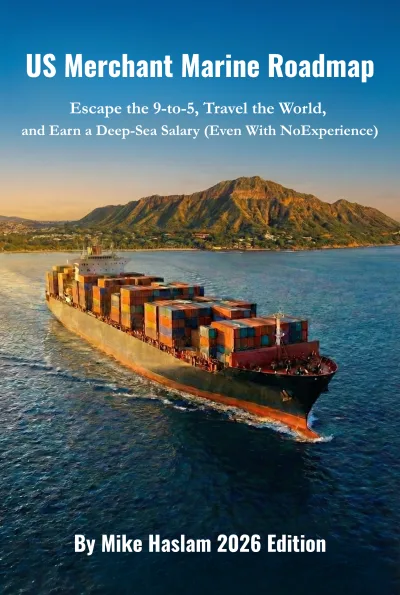
The US Merchant Marine Roadmap is on Amazon as a Kindle eBook and a paperback, and it's included with Kindle Unlimited.
Your First Ship Is Closer Than You Think
Get the US Merchant Marine Roadmap on Amazon and start on your credentials this week. Every month you wait is another month at the old job.